
instructions for After Extraction of Wisdom Teeth
Your actons following the surgery greatly influence your post-surgical experience and healing. Please follow the recommendations below to facilitate an optimal outcome.
- Bleeding: The surgical site bleeding will be controlled by the time you leave the office. It is not unusual for the surgical site to ooze/bleed slowly for up to 24 hours after your surgery. This bleeding time may be extended if you are taking blood thinners.
- Place moderate pressure on the surgical site with wet gauze for about 30 minutes after your surgery. This may be repeated as necessary. You no longer need to use the gauze if you are no longer bleeding. If significant bleeding is still present after 1.0 hour, soak a black tea bag for 3 minutes in water and then place it at the site of your bleeding with pressure for 30 minutes. This may be repeated as necessary.
- Swelling: It is normal for swelling to peak three days after your surgery, and it can take up to 7 days to completely resolve. Because of the swelling, it is normal to not be able to open your mouth maximally until the swelling subsides. It is also not unusual to have some mild bruising associated with the swelling, that will resolve on its own.
- Try to sleep with two or three pillows to raise your head above your heart for the first two days after your surgery to help decrease the development of swelling.
- Apply ice to your face/cheeks to help prevent the development of swelling. Apply the ice for 20 minutes and then remove for 20 minutes multiple times throughout the day for the first 48 hours after your surgery.
- After 48 hours following your surgery, moist heat (hot pack or warm towel) may be applied to help decrease the swelling present and improve your ability to open your mouth. Use the heat for 10 minutes on the area of swelling and then 10 minutes off multiple times throughout the day. You may also lightly massage the area.
- Wound Care: The gums typically take about 3 weeks to close/heal. Underlying bone takes about 3 months to heal.
- Brush all teeth twice a day. Try to avoid brushing directly on the surgical site(s). A clean mouth promotes optimal healing.
- You may have stitches placed at the surgical sites. Unless otherwise stated by your surgeon, the stitches will dissolve in about 2-3 weeks. Do not be concerned if your stitches become loose and fall out after a few days. Your surgical sites will heal without stitches. It’s not unusual to experience soreness and a small amount of bleeding when the stitches come loose and fall out.
- Avoid smoking, sipping through straws, aggressively swishing fluids in your mouth, and forcefully spitting for 5 days after your surgery to prevent the development of a dry socket and to prevent poor healing.
- Diet: You may begin eating as soon as you feel comfortable enough to do so after your surgery. A healthy diet promotes optimal healing.
- You should have a mild, room temperature, soft (consistency of a banana) food diet for 5 days following your surgery. Soft foods include Applesauce, Jell-O, pudding, yogurt, ice cream, protein/milk shakes (no straws), broth, mashed potatoes, soft pasta, mac & cheese, cottage cheese, banana, peanut butter, eggs, water, milk, electrolyte drinks.
- You should AVOID: Nuts, seeds, granola, potato chips, crunchy fried foods, acidic/hot (temperature) foods and drinks, carbonated drinks, and alcohol.
- Activity: We recommend taking at least a couple days off from school or work to allow yourself to rest and recover after your surgery.
- Avoid strenuous physical activity for 72 hours after surgery, as this may increase swelling, pain, and risk of dry socket. After 72 hours, you may begin gradually increasing the intensity of activities as tolerated.
- Pay attention to what your body tells you. If it hurts when doing an activity, avoid doing that activity until further healing takes place.
- Dry Socket: A dry socket can occur after a tooth extraction when the blood clot fails to form, is dislodged, or dissolves. It is characterized by a foul odor from the extraction site, delayed healing, and severe throbbing pain. The pain is typically not well controlled with pain medications, prevents you from sleeping, and can radiate to your ear, eye, temple, or neck area. Those at increased risk of dry socket include those who smoke/vape, females on birth control, poor oral hygiene, those with current or previous infections around the extraction, and failure to follow the recommended instructions above. Even though a dry socket can be painful, it rarely causes an infection or serious complications. A dry socket will typically heal on its own in 5-7 days. Treatment of a dry socket is elective and includes placing a medicated dressing into the extraction socket by our staff to relieve the pain. The disadvantage of this treatment is it further delays the healing/closure of the site.
If you experience an afterhours emergency issue you may contact an after-hours staff member at (252) 670- 0200. Such emergencies include:
- Difficulty swallowing or breathing
- Excessive/uncontrolled bleeding
- Itching or rashes that occur after taking your medications (possible allergic reaction)
- Persistent nausea
- Persistent fever (temperature of 100.4F or higher)
- Continuous severe pain not alleviated by the prescribed medications
- Swelling that increases 5 days after the surgery
- Draining pus
- Persistent numbness (beyond 12 hours)
- Any other issues you believe may necessitate an emergency room visit.
Your well-being is of the utmost importance to us, and we are committed to providing the highest level of care. Should you have any inquiries or concerns regarding your care, post-operative instructions, or the subsequent steps in your treatment plan, please do not hesitate to reach out to our office at (252) 638-6177 during regular business hours. Our dedicated team is here to support you at every stage of your recovery.
Are there any problems after the extraction of wisdom teeth?
As with any medical procedure, there can be complications or an unanticipated result. Some complications that patients undergoing wisdom tooth extraction may experience include:
- damage to the sensory nerve that supplies sensation to the lips and tongue
- sinus communication
- infections
- dry sockets
After the procedure, our assistants will review your post-operative instructions with your escort. We ask that you follow these instructions closely, as they will make you most comfortable following your procedure. If you were sedated, you will be comfortable and drowsy when you leave the office. Most patients prefer to go home and rest with no other physical or scholastic activities planned for a few days. There are multiple potential complications associated with wisdom tooth removal. These can include delayed healing, infection, and post-operative numbness or tingling in your lip, chin, or tongue. Drs. Williams & McQuinn will review relevant post-operative events with you and answer any questions during your office visit.

Damage to Sensory Nerve:
A primary concern is a nerve within the lower jaw bone that supplies feeling to the lower lip, chin, and tongue. This nerve is frequently very close to the roots of the lower wisdom teeth. Having these teeth out between the ages of 12 and 18 usually provides shorter roots so that the nerve is not so close to the roots of these teeth. Occasionally, when the teeth are removed, and especially in older patients, the nerve can become injured. When local anesthesia wears off, you may experience a tingling or numbing sensation in the lower lip, chin, or tongue. Should this occur, it is usually temporary and will resolve gradually over a period of weeks or months. On rare occasions it can result in a permanent alteration of sensation similar to having local anesthesia. We feel that you should be aware of this possibility before consenting to surgery.
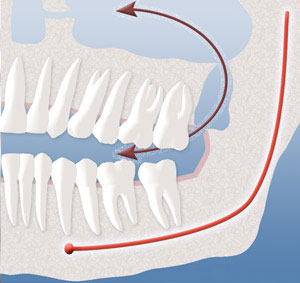
Sinus Communication:
The upper wisdom teeth are situated close to your sinuses, and their removal can result in an opening between your mouth and the sinus. Once again, if the teeth are removed at an early age, the root formation is minimal, and this complication is very unlikely. However, if it does occur, it will usually close spontaneously, but we may give you special instructions to follow, such as avoid blowing your nose for two or three days following the surgery. You can wipe your nose, but don’t blow your nose. If you have to sneeze, you should sneeze with an open mouth into a tissue. Pressure should not be created in the sinus area, which may dislodge the healing blood clot. If you sense this condition occurring after the surgery, please contact the office. An additional procedure may RARELY be necessary to close the opening.
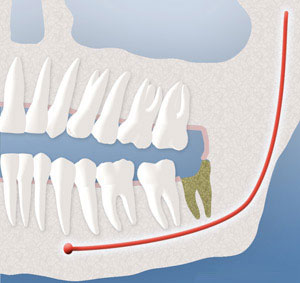
Dry Sockets:
Dry sockets continue to be the most common problem people experience following dental surgery. They arise due to premature loss of a blood clot in the empty tooth socket. This seems to occur with greater frequency in people who smoke or are taking birth control pills. While both jaws can be affected, they usually occur in the lower jaw on the third to fifth day. They cause a deep, dull, continuous aching on the affected side(s). Patients may first notice the pain starting in the ear radiating down towards the chin.
The symptoms frequently begin in the middle of the night, and your pain medication regimen may not help. Treatment can involve changing your prescription. Occasionally it is helpful to place a medicated dressing in the empty tooth socket. This will help decrease the pain and protect the socket from food particles. The effectiveness in alleviating the pain lasts for 24-48 hours and may require dressing changes every day or two, for five to seven days. Dressings usually are removed when you have been pain free for 2 to 3 days.
The dressing doesn’t aid in healing. The only reason to place a dressing is for pain control. If medication is controlling the pain, the socket will heal without a dressing. Following removal of the dressing, an irrigation device may be provided to help you to keep food particles from lodging in the extraction site.
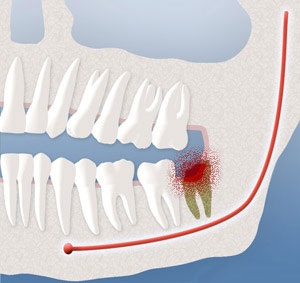
Infection:
Occasionally, post-operative infections occur. This usually requires an office visit and clinical examination. Many times, just placing you on an antibiotic for one week will take care of the infection. If it persists, the area will have to be drained and cleaned. Other temporary problems you may experience in the post-operative period include stiffness of the jaws, chafing around the corners of your lips, facial bruising, and blood oozing from the extraction sites. The post-operative instruction sheet we will provide should answer many of the questions related to these more common concerns. If not, don’t hesitate to call the office at Coastal Oral & Maxillofacial Surgery Phone Number 252-638-6177.